
First, turn off all water-using fixtures and check the flow-rate reading on your SAWS meter. If water continues flowing, test toilets, irrigation, water softeners, and appliances before assuming the leak is beneath your foundation. A leak in an underground service line or under the slab may leave no visible puddle. If the meter continues registering use and you cannot identify the source, call a licensed plumber for professional leak detection.
You open an email from San Antonio Water System warning about continuous water use. You check the kitchen, bathrooms, laundry room, and backyard. Nothing is dripping. No puddles. No wet cabinets. Still, the alert says water has been running for two days.
That is when many homeowners start searching for San Antonio leak detection because the usual signs are missing.
A hidden water leak can waste thousands of gallons before anyone notices. Sometimes it is a toilet flapper that no longer seals. Other times, a sprinkler valve is stuck open, an underground supply line is leaking into the soil, or a hot-water pipe beneath the foundation has failed.
The challenge is figuring out where the water is going before paying for the wrong repair.
This 2026 guide explains what a SAWS alert actually means, how to check your water meter, what symptoms suggest a slab leak, and when professional testing makes sense.
For help locating the source, explore our leak detection and repair services.
Why a SAWS Alert May Require San Antonio Leak Detection
SAWS uses ConnectH2O electronic water meters to provide more detailed water-use information. Rather than relying only on a monthly meter reading, customers can review hourly consumption through their online account.
According to SAWS, residential customers may receive a notification when their meter detects continuous use of at least five gallons per hour for more than 48 consecutive hours.
That is not proof of a slab leak. It is evidence that the meter recorded an unusual pattern worth investigating.
Toilets can waste water without making noise
A toilet flapper is the rubber seal at the bottom of the tank. When it becomes worn or warped, water slips into the bowl and the fill valve replaces it.
The water disappears straight into the drain, leaving the floor completely dry.
Irrigation systems can leak underground
A broken sprinkler pipe or valve can release water beneath grass or landscaping. You may never notice because the soil absorbs it.
Some irrigation valves also allow water to pass even when the controller is switched off.
Underground supply lines can hide larger problems
The water service line connects your meter to your home’s plumbing. A damaged line can leak beneath the yard, driveway, or walkway.
A slab leak happens when plumbing beneath or within the concrete foundation leaks. Depending on the location, water may move through soil or beneath flooring before becoming visible.
Pro Tip: Review your SAWS hourly-use graph before calling for slab leak repair. Regular spikes may suggest programmed irrigation, while continuous overnight use deserves a closer look.
SAWS estimated that plumbing leaks in San Antonio homes and yards wasted 2.5 billion gallons during 2025.
The meter provides the first clue. Your next task is finding which plumbing component matches that pattern.
Warning Signs That Help You Identify the Leak Source
Hidden leaks do not always create wet spots. Some show up through noise, temperature, water pressure, or unexpected meter activity.
Here are seven warning signs worth checking.
- A toilet refills when nobody flushed it. This can indicate a worn flapper, faulty fill valve, or water escaping through the overflow tube.
- Your water meter keeps moving with fixtures off. Continuous flow suggests water is still passing through the metered system.
- One area of grass stays unusually green. An underground service line or irrigation leak may provide extra water to that section.
- Your floor feels warm in one specific spot. A hot-water slab leak can warm tile or nearby flooring.
- Water pressure drops unexpectedly. A significant supply-line leak can reduce pressure, although utility conditions and fixture restrictions can produce similar symptoms.
- You hear running water when nothing is operating. A faint hiss near a wall or floor may indicate water moving through a concealed pipe.
- Your water bill rises without a clear reason. Compare the increase with irrigation schedules, guests, appliances, and your hourly consumption history.
A warm floor slab leak in San Antonio is one possibility, not a confirmed diagnosis. Sun exposure, heating equipment, and other conditions can also warm flooring.
The same caution applies to damp spots. A wet area near a foundation might come from irrigation, drainage, or air-conditioning condensate rather than a pressurized supply line.
Warning: If you see water spreading indoors, hear strong rushing sounds, or notice electrical equipment near moisture, stop using the affected area. Shut off the water only if you can safely reach a known shutoff valve.
Once these warning signs appear, delaying the investigation can increase both water waste and repair costs.
What Happens When You Ignore a Hidden Water Leak
A five-gallon-per-hour leak may sound small. Left running continuously, it wastes about 120 gallons daily and 3,600 gallons over 30 days.
That amount can increase your water bill without producing a single visible puddle.
The EPA WaterSense program reports that average household leaks can waste more than 9,300 gallons annually. It also estimates that 9 percent of homes have leaks wasting at least 50 gallons per day.
Water damage can spread behind finished surfaces
Water leaking inside walls can soften drywall, damage baseboards, and affect flooring. Water beneath cabinets can also damage materials long before the leak becomes obvious.
EPA guidance recommends drying wet building materials within 24 to 48 hours when possible to reduce mold growth.
Underground leaks can affect surrounding soil
A supply-line leak may wash soil away or leave it saturated. Around a slab foundation, prolonged moisture changes can contribute to ground movement, depending on soil conditions and other factors.
Not every slab leak causes foundation damage. Still, an active underground leak deserves attention before its effects become harder to correct.
Repair costs may grow
Consider the difference between a faulty toilet component and extensive slab work.
A minor fixture repair may cost a few hundred dollars. A slab repair involving excavation, concrete restoration, or pipe rerouting can cost several thousand.
The right investigation helps avoid unnecessary demolition and catches problems before restoration becomes part of the bill.
If you have already received a SAWS alert and your meter continues showing unexplained use, J.C. Enriquez Home Services can help locate the source. Our licensed plumbing team serves San Antonio and surrounding communities with same-day service availability. Call 210-679-6020 to discuss the problem and request an upfront estimate.
DIY Leak Checks vs. Calling a Licensed Plumber
You can rule out several common problems without opening walls or digging through the yard.
Start with the simplest checks and document what you find.
What You Can Handle
- Review your SAWS hourly water use. Look for constant overnight consumption, repeated irrigation periods, or unusual changes from your normal household pattern.
- Stop intentional water use. Make sure faucets, showers, appliances, outdoor hoses, and irrigation are not operating.
- Read the water meter. On a ConnectH2O meter, use the optical sensing button to reach the Flow Rate screen. SAWS says the display should show zero gallons per minute when nothing is using water.
- Test each toilet. Add food coloring to the tank, wait about 10 minutes without flushing, and check the bowl. Color appearing in the bowl indicates a leak.
- Inspect visible connections. Look beneath sinks and around water heaters, washing machines, refrigerator supply lines, and water softeners.
- Check irrigation equipment. Look for wet valve boxes, damaged sprinkler heads, unusual soft spots, and water running outside scheduled times.
- Repeat the meter test. Record the total-volume reading and check it later while water remains unused.
A zero reading now does not necessarily disprove an intermittent leak that occurred earlier.
When You Must Call a Pro
Professional help is appropriate when your meter continues registering water after accessible fixtures have been ruled out.
A licensed plumber can perform controlled shutoff and pressure tests to determine whether water is escaping from the service line or the home’s plumbing.
Texas allows homeowners certain repairs on their own homestead, but local permits and inspections may still apply. Excavation, foundation penetration, pipe rerouting, and complex repairs deserve licensed professional handling.
San Antonio plumbing contractors must register their state license with Development Services before obtaining required permits.
Do Not Do This: Do not drill through a slab, cut concealed plumbing, or open electrical equipment while investigating a suspected leak.
These checks provide useful information. Professional testing determines what happens next.
How Professional San Antonio Leak Detection Works
Professional leak detection should begin by confirming that water is escaping and identifying which section of plumbing is responsible.
The objective is to locate the leak with as little unnecessary damage as possible.
Step 1: Review the SAWS alert and history, 10 to 15 minutes
The plumber reviews your consumption pattern, high-bill history, symptoms, and recent changes in water use.
This may reveal a repeating irrigation schedule or continuous overnight flow.
Step 2: Confirm meter activity, 10 to 20 minutes
The plumber verifies that fixtures are off and checks the meter’s current flow reading.
A known house shutoff may help isolate the service line from indoor plumbing. Results depend on whether irrigation and other branches connect before or after that valve.
Step 3: Isolate likely fixtures and systems, 15 to 45 minutes
Toilets, irrigation, water softeners, water heaters, and other connected systems are checked.
Each isolation test helps narrow the possible leak location.
Step 4: Pressure-test the plumbing, 20 to 60 minutes
A pressure test measures whether a closed section of plumbing holds pressure.
If pressure drops without intentional water use, that section may be leaking. The plumber interprets the result alongside valve condition and the plumbing layout.
Step 5: Locate concealed leaks, 30 to 90 minutes
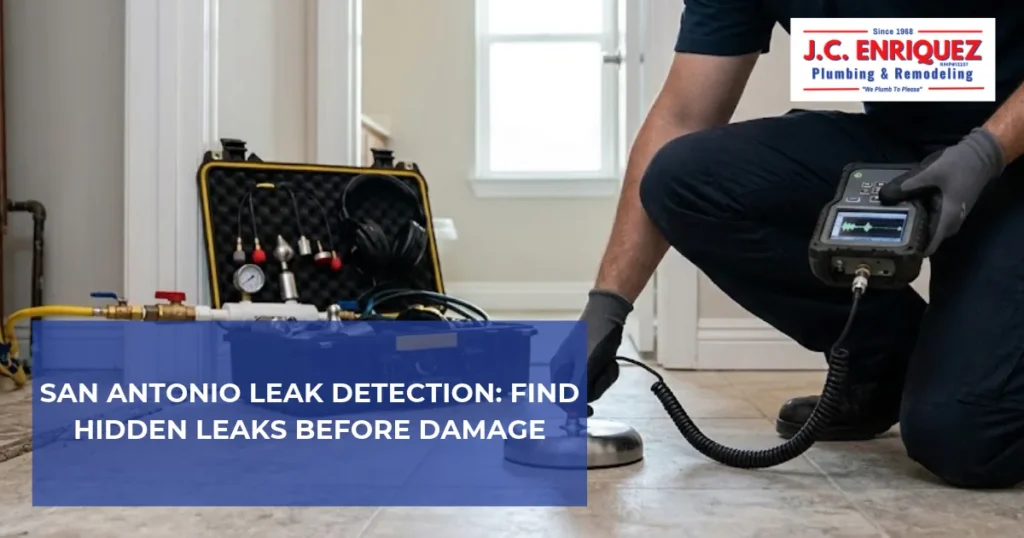
For suspected slab leaks, technicians may use acoustic equipment to listen for escaping water.
Thermal imaging can reveal temperature differences associated with some hot-water leaks. Neither method guarantees an exact location in every situation.
Step 6: Compare repair options, 15 to 30 minutes
Possible solutions include replacing a toilet component, repairing an irrigation pipe, excavating an underground service line, repairing a pipe beneath the slab, or rerouting a damaged supply line.
A slab leak reroute in San Antonio may run replacement piping through another approved route to avoid opening large areas of concrete.
Step 7: Repair, retest, and document, several hours to several days
Repair time depends on the problem. A fixture repair may be completed quickly, while underground or foundation work can require additional time.
The plumber should verify the repair, document the work, and explain any remaining restoration needs.
A good inspection produces a clear diagnosis before recommending expensive work.
San Antonio Leak Detection and Slab Repair Costs in 2026
The cost of San Antonio leak detection depends on the leak location, testing required, accessibility, and repair method.
Those figures should not be added together automatically. Some published slab repair estimates already include detection, while restoration may be excluded.
What changes the final price?
Older plumbing, buried utility lines, difficult access, finished flooring, pipe material, permit requirements, and emergency scheduling can all affect pricing.
Ask whether the estimate includes pressure testing, electronic detection, labor, piping, excavation, cleanup, concrete restoration, and warranty coverage.
Know the warning signs of a poor estimate
Be cautious when someone recommends major slab excavation without explaining the diagnostic evidence.
A legitimate estimate should identify the suspected leak location, proposed method, materials, and warranty terms.
Financing may be available for qualifying larger plumbing repairs through J.C. Enriquez Home Services. Ask about current terms before approving work.
The best way to price a foundation plumbing leak in San Antonio is through direct diagnosis and a written estimate.
How to Choose a Licensed Leak Detection Plumber
When searching for a slab leak plumber in San Antonio, focus on diagnostic ability rather than advertising promises.
A contractor should understand fixture leaks, underground service lines, pressure testing, and under-slab plumbing.
Verify licensing and insurance
Use the Texas State Board of Plumbing Examiners’ public license search to verify the company’s Responsible Master Plumber.
The Board also allows consumers to confirm whether the Responsible Master Plumber has a Certificate of Insurance on file.
Texas requires Responsible Master Plumbers to maintain at least $300,000 in general commercial liability insurance. Ask about any additional bonding relevant to the project rather than assuming every contractor carries the same bond.
Ask how the leak will be located
Questions worth asking include:
- Will you inspect accessible fixtures before recommending slab work?
- Do you use pressure testing, acoustic equipment, or thermal imaging?
- Can you distinguish an underground service line leak from a slab leak?
- Will I receive a written diagnosis and estimate?
- Can you compare direct repair with pipe rerouting?
- Who handles required permits and inspections?
- What parts and labor warranties apply?
- Does the estimate include restoration?
Manufacturer training may matter if the leak involves equipment such as Rheem, Bradford White, or Navien water heaters. However, those credentials do not replace Texas plumbing licensing or leak-detection experience.
Review local reputation carefully
Check Google, Yelp, Nextdoor, and BBB for reviews describing communication, diagnosis, cleanliness, and the completed repair.
J.C. Enriquez Home Services has served San Antonio since 1968 across three generations. The company lists Texas Plumbing License PM-13237 and holds BBB accreditation with an A+ rating.
Local experience matters because an irrigation leak in Helotes, a service-line problem in Schertz, and a slab leak in Cibolo may require different approaches.
A dependable plumber should explain those differences before you approve a repair.
San Antonio Water Conditions, Seasonal Risks, and Leak Prevention
San Antonio’s climate and plumbing conditions make routine leak checks especially valuable.
During hot, dry periods, irrigation systems operate more often. Small problems with underground pipes, sprinkler heads, and valves can become more expensive when they go unnoticed.
Hard water adds another maintenance concern
SAWS reports typical water hardness of 15 to 20 grains per gallon.
Hard water does not automatically cause slab leaks, but mineral deposits can affect some plumbing fixtures and valves over time.
Understand who repairs the leak
SAWS maintains its system from the public water main to the meter. Homeowners are generally responsible for water lines and plumbing from the meter toward the home.
If a leak appears on the SAWS side of the meter, report it to the utility. For private-property plumbing leaks, hire a qualified plumber.
This distinction matters when a homeowner sees water near the street but cannot tell where the actual break is located.
Ask about a possible SAWS bill adjustment
SAWS has a leak-adjustment process for qualifying customers after repairs are completed.
Eligible leaks may include toilets, irrigation pipes, underground lines, and foundation plumbing. Homeowners must request an adjustment within 60 days of repair.
The adjustment is not guaranteed and does not reimburse plumbing repair costs. It may cover part of the excess water charges.
Follow a preventive checklist
- Review SAWS hourly consumption regularly.
- Test toilets at least once a year.
- Inspect irrigation valves and sprinkler heads.
- Check water heater and softener connections.
- Watch for unusual pressure changes.
- Inspect visible piping after freezing weather.
- Keep repair receipts and meter records.
- Schedule professional testing when unexplained consumption continues.
SAWS also offers assistance with water-use troubleshooting through its conservation team.
Preventive checks may uncover a small fixture problem before it becomes an expensive underground investigation.
Homeowners Also Ask About Hidden Water Leaks
Why did SAWS send me a leak alert when nothing is wet?
SAWS ConnectH2O meters monitor water use and can identify prolonged continuous flow. The alert does not require a visible puddle. A toilet may leak directly into its bowl, irrigation water may soak into the soil, or a concealed pipe may release water where you cannot see it. Review your hourly readings, check accessible fixtures, and perform a meter test. If unexplained flow continues, schedule professional San Antonio leak detection.
How do plumbers detect a leak under a concrete foundation?
Plumbers use several diagnostic methods to locate possible leaks beneath a slab. They may first isolate plumbing sections and conduct pressure tests to identify the leaking line. Acoustic detection equipment can sometimes locate the sound of pressurized water escaping underground. Thermal imaging may help identify temperature changes associated with hot-water leaks. These tests guide the repair location and help reduce unnecessary demolition.
Can a slab leak exist without water appearing on the floor?
Yes. Water from a pipe beneath the foundation may spread through surrounding soil without reaching the finished floor. Some leaks eventually create warm spots, damaged flooring, damp walls, or unexplained odors. Others remain hidden while the water meter records continuous consumption. A suspected slab leak should be confirmed through professional testing because the same symptoms can have other causes.
Does SAWS repair underground leaks on my property?
Generally, no. SAWS is responsible for its water infrastructure up to the meter, while the homeowner is responsible for plumbing from the meter toward the home. That includes many buried service lines and pipes beneath foundations. If you believe the leak is on the utility’s side, report it to SAWS. If it is on private property, arrange professional diagnosis and repair.
Frequently Asked Questions
Q: How much does slab leak detection cost in San Antonio?
A: National 2026 cost data places professional slab leak detection around $150 to $400, although complex investigations may cost more. Pricing depends on equipment, the number of plumbing sections tested, accessibility, and the time required to locate the problem. Ask whether the diagnostic fee is separate from the eventual repair. A written estimate should explain what testing is included.
Q: How long does professional hidden leak detection take?
A: A straightforward fixture investigation may take less than an hour. More complicated underground or slab leak detection can take several hours, especially when the plumber needs to isolate multiple plumbing lines. Repair time is separate from diagnosis. A slab reroute or concrete access repair may require additional visits, permits, and restoration work.
Q: Do I need a licensed plumber for slab leak repair?
A: Hiring a licensed plumbing professional is strongly recommended for slab leaks, buried supply lines, pressure testing, and pipe rerouting. Texas allows certain owner-performed work on a homestead, but municipal permits and inspections may still apply. Professional plumbing contractors must follow state licensing requirements. Before hiring, verify the Responsible Master Plumber through the Texas State Board of Plumbing Examiners.
Q: What warranty should I expect after slab leak repair?
A: Warranty coverage depends on the repair method, pipe materials, and contractor. Ask for written terms covering the repaired section, installation labor, and any manufacturer-backed materials. Confirm whether concrete restoration, flooring, and unrelated pipe failures are excluded. Keep the invoice, diagnostic records, and warranty together, especially if another leak develops later.
Q: Can J.C. Enriquez help with slab leaks outside San Antonio?
A: J.C. Enriquez Home Services serves San Antonio and nearby communities, including Helotes, Schertz, Cibolo, Converse, Live Oak, Windcrest, and Boerne. The company provides leak detection and water-line services, with same-day and emergency scheduling options. Call 210-679-6020 to confirm availability for your location and describe whether you have a SAWS alert, unusual meter activity, or suspected foundation leak.
Find the Hidden Leak Before It Becomes a Bigger Repair
A SAWS alert is a reason to investigate, not proof that you need a new underground pipe or expensive slab work.
J.C. Enriquez Home Services provides San Antonio leak detection, plumbing repairs, underground water-line service, and professional guidance for suspected foundation leaks. With three generations of local experience since 1968, our team focuses on identifying the actual problem before recommending a repair.
Call 210-679-6020 now to schedule leak detection in San Antonio, TX, Helotes, Schertz, Cibolo, Converse, and surrounding communities. Water waste can continue long before visible damage appears, so unexplained continuous use deserves prompt attention.